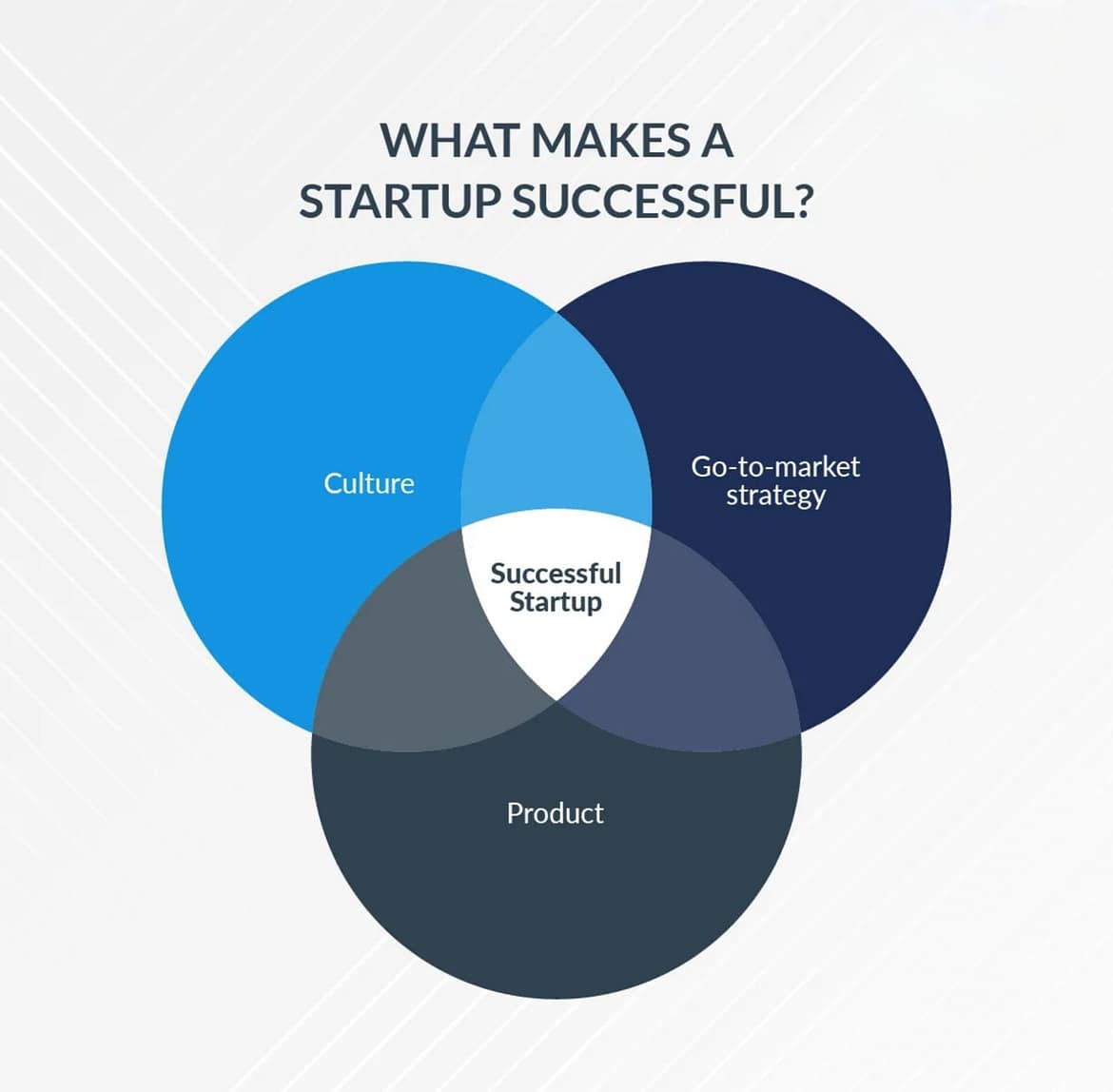

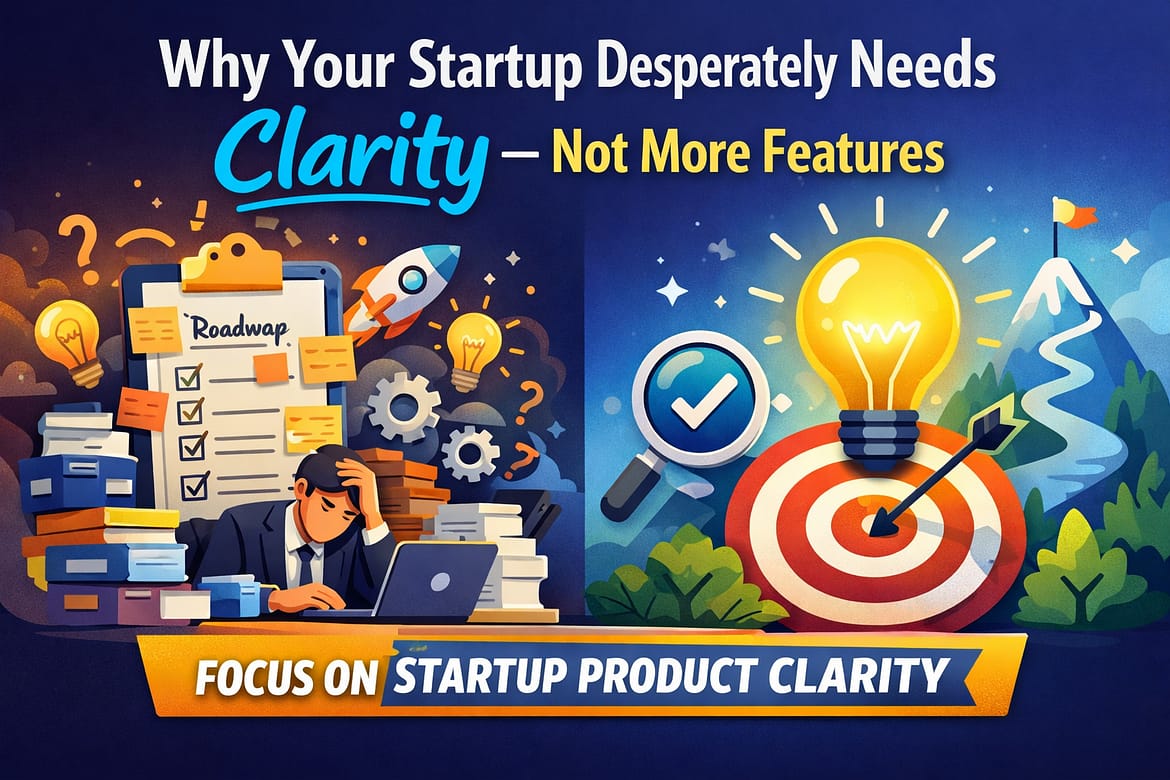
There is a particular kind of busy that slowly kills startups. It is the type where the roadmap keeps growing and the feature list multiplies. The team ships every two weeks, yet customers are not staying, revenue is stalling, and nobody can explain in one sentence what the product actually does. Ten out of ten times when this happens, it is not a development problem but rather a startup product clarity problem, and it is more common than any founder wants to admit.
The Feature Trap Is Real
In this instance, every new feature looks like progress, which has another checkbox, another customer request fulfilled, and another reason to believe the product is getting better. However, most founders build their products backwards. They start with wireframes, features, and fancy UI, which is usually something to show investors, and spend significant money developing those features separately and then wonder why nothing works together. The result is usually called product bloat or sometimes called “productitis.” It leaves teams with lots of activity but little impact. They are moving, but not advancing. Burn rate increases, and the ability to iterate shrinks with every misstep.
However, more features do not equal more value. where startup product clarity is what is needed. They often are the same, with more confusion for customers, for the team, and most dangerously, for the founder.
What Startup Product Clarity Actually Means
Startup product clarity is the discipline of knowing exactly who you are solving for, what problem you are solving, and why your solution is the right one; and letting that knowledge drive every product decision.
According to Marc Andreessen, the only thing that matters is getting to product-market fit. The market should pull the product out of you, not the other way around. When it does not, when features are being added because a competitor has them, or because a single loud customer requested them, or because shipping feels better than thinking, you have lost the thread.
The playbook is not MVP; it goes beyond iterating and winning. Rather, it is a micro-test, traction proof, MVP-lite, GTM validation, and then real usage. When all of these processes are complied with, you can proceed to pressing the full throttle. Unless you are completely robed with the requisite knowledge of your products, that sequence will likely not work. Essentially, without startup product clarity, every iteration is just noise dressed as progress.
The Signals You Are Missing
It is also noteworthy that founders often mistake early traction for validation. What is trickier is when founders hallucinate product-market fit by mistaking early sales growth for true PMF. True fit is about long-term retention and expansion. Are customers sticking with you? If they are not sticking, no new feature will fix it; rather, startup product clarity will.
In other words, a concrete test exists, and that is if at least 40% of surveyed customers would be “very disappointed” without your product, it indicates a strong market fit. Most startups adding features compulsively have never run that test. They are building answers to questions their customers never asked.
The startups winning right now are not the ones with the most features but the ones that are impossible to misunderstand.
Brisk, an AI tool for teachers, is a perfect example. Rather than building a standalone platform, they embedded it directly into tools teachers already used, such as Google Docs, YouTube, and PDF viewers. They didn’t deploy any new behavior or learning curve. What worked was just clarity about who they served and how to reach them inside existing workflows. They reached over one million educators across 100 countries in under 18 months, driven primarily by word-of-mouth.
What to Do Instead
Stop the roadmap for one week, and ruminate over these questions: what is the one problem we solve better than anyone else? Who is the specific person experiencing that problem daily? Would they be genuinely disappointed if we disappeared tomorrow? A startup can have a strong product and still fail because customer acquisition is too expensive or too unpredictable. Clarity fixes that. When you know precisely who you serve, acquisition becomes cheaper, messaging sharpens, and retention follows naturally.
The goal is not to build less but to build with intention, where every feature earns its place by serving a clearly defined user with a clearly defined need. Your startup does not have a feature shortage, but what it does lack is a focus shortage. Fix the clarity. The right features will follow.
TechPolyp spotlights Africa’s most promising startups and the ideas shaping the continent’s tech future. Explore our founder interviews and startup directory.